
Cette publication est également disponible en :
 Français
Table of Contents
In 1891, Wilhelm Bacher devoted two installments of the Revue des études juives to a decisive question: how does the Zohar read the Bible? Brought together here for the first time on Beit HaZohar as a single facsimile, these two texts show a nineteenth-century scholar attentive not only to mystical exegesis, but also to literal, rabbinic and philological modes of interpretation found in the Zoharic corpus.
An article published in two installments in 1891
Bacher’s study appeared in volume 22 of the Revue des études juives in two parts: the first in no. 43 (January-March 1891), pp. 33-46; the second, announced as “suite et fin” (“continuation and conclusion”), in no. 44 (April-June 1891), pp. 219-229. Both records are available on Persée; their DOIs are 10.3406/rjuiv.1891.3719 and 10.3406/rjuiv.1891.3748.
The PDF below brings together the 25 pages of the study in their original order, restoring the article as a continuous whole while preserving the pagination and typography of the 1891 facsimile.
Who was Wilhelm Bacher?
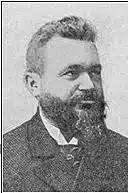
Wilhelm Bacher (1850-1913), also known by his Hungarian first name Vilmos, was one of the major representatives of the modern academic study of Judaism in Central Europe. A rabbi, orientalist, philologist and historian of rabbinic literature, he taught at the Rabbinical Seminary of Budapest from its foundation in 1877 and became its director in 1907. His work covered biblical exegesis, Talmudic and Midrashic literature, Hebrew, Arabic and Judeo-Persian. The Revue des études juives, to which he contributed regularly, published an obituary notice devoted to him in 1914.
His scholarly profile is essential for understanding this article: Bacher does not read the Zohar as a practitioner of Kabbalah, but as a historian of exegesis. He seeks to identify reading techniques, borrowings, parallels and intellectual lineages. This gives his study lasting documentary value, even where some of its conclusions must now be placed within the state of scholarship at the end of the nineteenth century.
What Bacher looks for in the Zohar
The article’s main interest lies in shifting the reader’s perspective. While the Zohar is commonly associated with mystical and symbolic interpretation, Bacher also gathers passages in which forms of peshat, philological reasoning, parallels with medieval exegetes and methods inherited from rabbinic tradition can be observed. He therefore asks how the Zohar mobilizes Scripture and what intellectual environments it may reflect.
His reading pays particular attention to possible relationships with medieval Jewish exegesis in Spain and Provence, as well as with commentators such as Rashi, Abraham ibn Ezra, David Kimhi and other authorities cited or echoed by the text. For Bacher, these parallels function both as exegetical observations and as historical clues.
Reading this study today
Bacher must nevertheless be read historically. In the opening lines of his study, he presents the question of the Zohar’s medieval origin as largely settled and gives a central place to Moses de León. This orientation had a major influence on twentieth-century scholarship. More recent research, however, has complicated the idea of a single author: a significant part of current scholarship describes Zoharic literature as a layered and collective corpus connected with several authors, circles or stages of composition, even though Moses de León remains a central figure in its formation and transmission.
This historical distance is precisely what makes the article valuable. It shows how, as early as 1891, a historical reading of the Zohar was being organized around biblical exegesis, while also preserving numerous observations and textual parallels that remain useful independently of debates over authorship and dating.
The complete text brought together in one PDF
This facsimile brings together the two installments published in 1891: pp. 33-46, followed by pp. 219-229. The scans come from the digitized copy of the Revue des études juives available through Google Books; the bibliographic references were checked against Persée. The historical article itself is in French.
To continue on Beit HaZohar, see The Composition of the Zohar: BnF manuscripts, the Dictionary of the Zohar, and Print and edit the Sefer ha-Zohar.
References
- Wilhelm Bacher, “L’exégèse biblique dans le Zohar,” Revue des études juives, vol. 22, no. 43, 1891, pp. 33-46.
- Wilhelm Bacher, “L’exégèse biblique dans le Zohar” (suite et fin), Revue des études juives, vol. 22, no. 44, 1891, pp. 219-229.
- Maurice Liber, “W. Bacher,” Revue des études juives, vol. 67, no. 134, 1914, pp. 161-169.
- Ronit Meroz, “The Archaeology of the Zohar: Sifra Ditseniʽuta as a Sample Text,” Da‘at, 82, 2016.